
COMBATIVES · DECISION MAKING
The problem is not simply making decisions faster.
In conflict, a decision can become useless when it is based on a delayed or inaccurate understanding of what is actually happening.
John Boyd devoted much of his work to understanding how people and organizations perceive change, interpret information, make decisions, and act in competitive and uncertain environments.
From that work came the concept for which he became best known: the OODA Loop — Observe, Orient, Decide, Act.
The model became popular because it appears simple. Four words fit easily into a diagram.
Boyd's thinking was far more complex.
OODA is not simply about doing something before an opponent does. It is about understanding a changing situation and continuing to adapt as that situation changes.
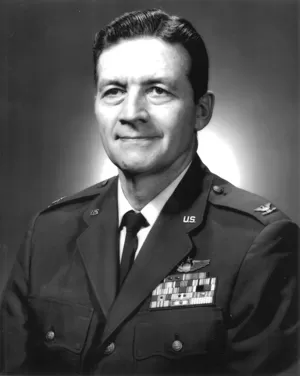
JOHN BOYD
Far more than four letters.
John Richard Boyd was born in 1927 and died in 1997. He was a fighter pilot and colonel in the United States Air Force who later developed ideas that influenced thinking on air combat, strategy, maneuver, command and control, and decision-making.
Among his best-known works are Destruction and Creation, Patterns of Conflict, and Organic Design for Command and Control.
Boyd viewed conflict as a dynamic process. An opponent does not remain still while someone analyzes the situation. The environment changes. New information appears. Other information disappears. Decisions produce consequences that reshape the problem again.
The OODA Loop needs to be understood within that reality.
THE OODA LOOP
Observe. Orient. Decide. Act.
These are not four independent boxes. They are parts of an ongoing process of interacting with a reality that does not stand still.
Observe
Take in information about the environment, other people, yourself, and the changes taking place around you. Observation is more than simply looking. It means acquiring relevant information while the situation continues to evolve.
Orient
Give meaning to what has been observed. Previous experience, knowledge, culture, expectations, mental models, new information, and analytical ability all influence how a situation is interpreted.
Decide
Select a course of action based on your current understanding of the situation. In uncertain environments, perfect information rarely exists. Waiting for complete certainty is itself a decision — and it consumes time.
Act
Turn the decision into action. That action changes the environment, produces responses, and generates new information. The process begins again.
ORIENTATION
Speed may not be the most important part.
Before a bad decision, there is often a bad interpretation of the situation.
Boyd placed central importance on orientation. This is where what we observe is given meaning.
Two people can witness the same event and understand it differently because they bring different experiences, expectations, knowledge, and mental models to the situation.
This helps explain why simply telling someone to “pay attention” is not enough.
A person can be looking directly at an event and still fail to immediately understand what is happening.
RECOGNITION
Seeing is not the same as understanding.
Violent situations rarely arrive with a clear explanation of what is happening.
A movement may initially look like play. An argument may appear to be nothing more than an argument. An approach may seem ordinary. An object may not immediately be recognized as a weapon.
During that interval, the brain is trying to interpret incomplete information.
The delay between what is actually happening and recognizing what is happening can be decisive.
Reality can change before our interpretation catches up.
SPEED ≠ HURRY
Faster decisions do not mean careless decisions.
One popular interpretation of OODA reduces the concept to a simple idea: “be faster than the other person.”
That is incomplete.
A very fast decision based on poor orientation can make a situation worse. Speed without understanding may simply produce an error sooner.
The advantage lies in the ability to recognize change, update your understanding, make an appropriate decision, and continue adapting.
In other words, acting first is not enough.
You must continue understanding what is happening.
CONFLICT
Conflict is an information problem.
During conflict, different people are trying to understand and influence the same situation at the same time.
Every action changes what the other person observes. Every change demands a new interpretation.
Surprise, ambiguity, fear, noise, distance, obstacles, other people, and conflicting information all increase the difficulty.
That is why conflict cannot be reduced to a fixed sequence of movements.
The environment changes. People react. Decisions alter available options.
What might have worked one second earlier may no longer work one second later.
COMBATIVES APPLICATION
Before technique, there is a decision.
And before the decision, there is an interpretation of the situation.
This is one reason why the study of protection cannot begin exclusively with physical confrontation.
Before any technique becomes relevant, more important questions may already exist:
What is actually happening? Has the situation changed? Is there an exit? Is there distance? Are other people present? Is there a weapon? Is the objective property, control, assault, or forced movement? Will intervention reduce the danger or increase it?
These questions do not have universal answers.
But ignoring them and beginning the problem with a physical technique means starting too late.
TRAINING
Training decision-making is different from rehearsing a response.
If a student always knows the attack, the distance, the partner's intent, and the expected response in advance, an important part of the problem has already been removed from the training.
Incomplete information.
You may not immediately know what is happening.
Change.
The situation may change after a decision has already been made.
Alternatives.
Physical confrontation should not be the only available option.
Consequence.
Every action creates a new situation that must be observed and interpreted again.
Adaptation.
A response must be abandoned when it no longer fits the situation.
LIMITS
OODA is not a survival formula.
The OODA Loop emerged from the study of conflict and decision-making, but that does not make it a universal self-defense technique.
It cannot predict exactly how a person will react, eliminate surprise, guarantee the correct decision, or replace specialized knowledge of violence, behavior, security, or physical training.
Its value is in providing a framework for thinking about perception, interpretation, decision, action, and adaptation in changing situations.
COMBATIVES NOTE: the application of OODA to personal protection presented in this article is an educational interpretation by COMBATIVES. It should not be understood as a claim that John Boyd developed the model specifically as a method of civilian self-defense.
SOURCES & FURTHER STUDY
References for further study.
John R. Boyd — Patterns of Conflict
Boyd's central presentation on conflict, adaptation, maneuver, time, and competitive interaction.
John R. Boyd — Destruction and Creation
An essay examining the construction, destruction, and updating of mental models used to understand reality.
John R. Boyd — Organic Design for Command and Control
A work in which Boyd further develops ideas related to orientation, interaction, adaptation, and command and control.
U.S. Marine Corps — MCDP 6: Command and Control
Marine Corps doctrine that uses the OODA Loop as a framework for discussing command and control in conflict.
U.S. Marine Corps — Decision-Making / Boyd Cycle
Training material describing Observe, Orient, Decide, and Act while emphasizing that the process should not be understood as simply linear.
COMBATIVES
Perceive. Understand. Decide. Adapt.
A response is only as good as the understanding of the situation that produced it.