COMBATIVES · LEADERSHIP UNDER PRESSURE
The plan ended. Leadership began.
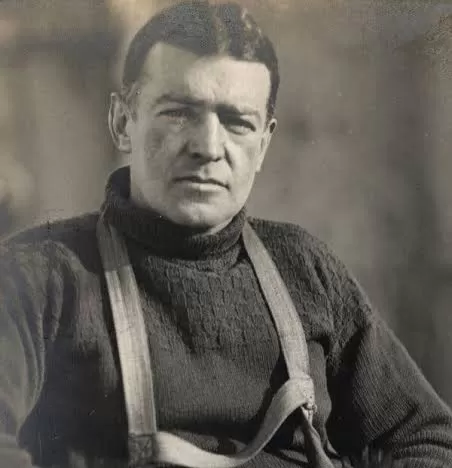
Ernest Shackleton became known not for completing the mission he planned, but for the way he responded when that mission became impossible.
Ernest Henry Shackleton was born in 1874 and died in 1922. A British polar explorer, he took part in some of the major expeditions of what became known as the Heroic Age of Antarctic Exploration.
His best-known expedition began with an ambitious objective: to make the first land crossing of the Antarctic continent.
The objective was not achieved.
The ship was lost. The route ceased to exist. And the mission had to change.
ENDURANCE · 1915
When the environment destroys the plan.
In January 1915, Endurance became trapped in the ice of the Weddell Sea before Shackleton and his men could begin their planned crossing.
The ship remained immobilized for months.
There was no simple decision capable of freeing it. The crew drifted with the ice while conditions continued to change.
The pressure increased progressively until, in October 1915, Shackleton ordered the ship abandoned.
Shortly afterward, Endurance sank.
From that moment on, completing the expedition was no longer the problem.
CHANGE THE MISSION
The original objective no longer mattered.
The priority changed from crossing a continent to bringing 28 men back alive.
That change seems obvious when viewed more than a century later.
It was not.
Large projects accumulate money, effort, identity, reputation and expectation.
The greater the investment already made, the greater the resistance may be to admitting that the original objective no longer makes sense.
Shackleton had to abandon what had defined the expedition and replace the mission with another.
Survival was now success.
DECISION UNDER UNCERTAINTY
Not every correct decision looks like action.
For months, the men remained on the ice, waiting for conditions that offered some realistic possibility of movement.
Leadership during that period did not mean taking some major action every day.
It meant managing resources, food, shelter, discipline, physical exhaustion, internal conflict and morale while few options were available.
Acting merely to demonstrate action could consume energy, resources and opportunities.
In extreme environments, waiting can also be a decision.
ELEPHANT ISLAND
Solving one problem created another.
When they finally managed to leave the ice, the men reached Elephant Island. For the first time in many months they were on solid ground — but they remained isolated.
The island was uninhabited and far from normal shipping routes.
Remaining there indefinitely meant depending on a rescue that might never come.
Shackleton again had to change strategy.
There was no risk-free option.
The decision became choosing which risk still offered some possibility of changing the situation.
THE JAMES CAIRD
Six men. One small boat. Open ocean.
Shackleton did not try to eliminate risk. He chose a risk that still offered a way out.
On April 24, 1916, Shackleton and five other men left Elephant Island aboard the James Caird, an adapted lifeboat.
The objective was to reach South Georgia, approximately 1,300 kilometers away, across one of the most hostile ocean regions on the planet.
The crossing depended not only on Shackleton's decision, but also on the technical capability of specific people.
Frank Worsley, captain of Endurance, played a decisive role in navigation.
Leadership in this case did not mean having every answer.
It meant knowing who had the capability required for each problem.
SOUTH GEORGIA
Arriving did not mean finishing.
The James Caird reached South Georgia, but landed on the uninhabited side of the island.
The group still needed to reach the whaling stations on the other side.
Shackleton, Frank Worsley and Tom Crean crossed the island's mountainous interior on foot.
After approximately 36 hours of travel, they reached the whaling station at Stromness.
It was the first time in many months that Shackleton had access to outside help.
But 22 men were still waiting on Elephant Island.
RESCUE · 30 AUGUST 1916
The mission ended only when the others came back.
Shackleton still had to face several failed attempts to return to Elephant Island because of ice conditions.
On August 30, 1916, he finally reached the island.
The 22 men who had remained there were rescued alive.
All 28 men of the Endurance party survived.
That precision matters.
The Imperial Trans-Antarctic Expedition was larger than the Endurance party alone. Three men from the Ross Sea Party died during operations on the other side of the continent.
Therefore, the historically accurate statement is: all 28 men of the Endurance party survived.
LEADERSHIP
Leadership was not insisting on the plan.
It was recognizing when the plan was over.
Shackleton did not complete the crossing he had proposed.
The ship was destroyed.
The original objective failed.
But when conditions changed, the definition of success changed too.
From that point on, leadership meant preserving options, managing people and resources, recognizing when to wait, identifying when to act and continuing to change the plan as new information emerged.
COMBATIVES STUDY
What the case allows us to study.
Recognize when the objective is dead.
Continuing to pursue an old objective can consume resources needed to solve the problem that now exists.
Change the definition of success.
When reality changes, the measure of a successful outcome may also need to change.
Preserve options.
Some important decisions do not solve the problem immediately; they simply keep future possibilities open.
Manage human resources.
Fatigue, morale, internal conflict, discipline and cohesion are also part of a crisis.
Use distributed expertise.
Leadership does not mean doing everything alone. Worsley, Crean and other crew members had capabilities essential to the group's survival.
Choose between risks.
In real situations, there is often no safe alternative. The decision may be between different risks.
Keep updating the plan.
Ice, ocean, location, resources and conditions kept changing. A decision that made sense at one moment could stop being useful later.
LIMITS
History is not a formula.
The Endurance case should not be turned into a collection of universal leadership rules.
Decisions made during a 1915 polar expedition cannot automatically be transferred to companies, security, personal protection or other modern crises.
Its value lies in allowing us to study recurring problems: uncertainty, loss of resources, changes in objectives, incomplete information, leadership, adaptation and consequences.
COMBATIVES NOTE: the applications presented in this article are educational interpretations by COMBATIVES based on a historical case. They are not universal scientific principles or a methodology created by Ernest Shackleton for protection or crisis management.
SOURCES & FURTHER STUDY
References for further study.
Royal Museums Greenwich — Sir Ernest Shackleton
Timeline and historical context of Shackleton's expeditions, including Endurance, Elephant Island and the voyage of the James Caird.
Royal Museums Greenwich — Antarctic Explorers
Historical material on Shackleton and other Antarctic explorers.
Scott Polar Research Institute — University of Cambridge
Archives, collections and historical material related to polar exploration and Antarctic expeditions.
South Georgia Museum
Historical collection related to South Georgia, polar exploration and Ernest Shackleton.
COMBATIVES
When reality changes, the plan has to change with it.
Persistence is not continuing to do the same thing. Sometimes persistence means abandoning the plan before the plan takes everyone down with it.