
The 80/20 Principle: when you understand it, the game changes COMBATIVES
COMBATIVES · PRIORITY & DECISION MAKING
Doing more does not necessarily produce more results.
The 80/20 Principle begins with a simple observation: results, causes and efforts are often not distributed evenly.
I encountered this idea early. I read about it, saw charts, examples and applications.
Even so, it took time for it to really sink in.
Not because understanding 80 and 20 is difficult.
What is difficult is accepting what the idea implies: a large part of what we do may consume time without changing the result proportionally.
ORIGIN
The distribution was not uniform.
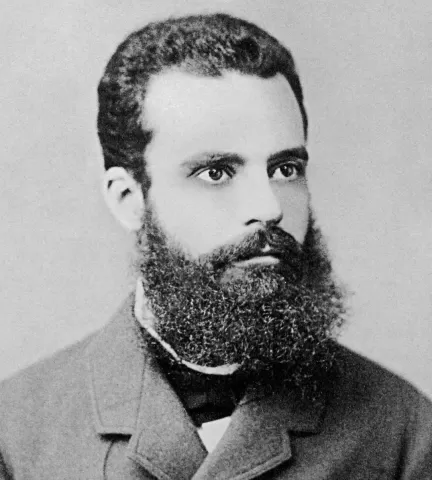
The principle takes its name from Italian economist Vilfredo Pareto, who studied the distribution of income and wealth in the late nineteenth century.
Pareto observed highly unequal distributions: a relatively small part of the population controlled a much larger share of the resources.
Decades later, Joseph M. Juran applied this logic to quality management and popularized the idea of the “vital few”: a small number of causes can account for a very large share of observed effects.
From that tradition, the expression Pareto Principle came to be used much more broadly.
80 / 20
The numbers do not have to be exactly 80 and 20.
The point is not the exact ratio. It is the asymmetry.
In a particular problem, the relationship may appear as 70/30, 90/10 or something else.
The 80/20 Principle should not be treated as a physical law in which exactly 20% of causes will always produce exactly 80% of results.
Its value lies in provoking a question:
which few factors are producing a disproportionate share of the result?
That question is more useful than trying to force every problem to fit mathematically into 80 and 20.
PRIORITY
Not everything deserves the same weight.
This may be the most uncomfortable aspect of the principle.
If certain factors produce far more results than others, then treating every task, decision or problem as equally important is a poor way to distribute attention.
A full schedule can create a feeling of progress.
A long task list can create a feeling of control.
Neither proves that what actually changes the result is receiving attention.
Activity and impact are different measures.
WORK & DECISIONS
A small number of decisions can determine a large part of the result.
At work, the problem is rarely just a lack of activity. Often there is too much activity directed toward things with little impact.
A few clients may represent a large share of revenue.
A few problems may produce most complaints.
A few decisions may significantly change a project while dozens of others merely keep the system running.
80/20 logic does not mean abandoning everything else.
It means recognizing that priority should not be distributed evenly.
COMBATIVES
More techniques do not necessarily mean better preparation.
A large repertoire has little value if the important responses cannot be retrieved when they are needed.
In physical training, it is easy to confuse the amount of content with actual capability.
Learning a new technique creates an immediate sense of expanding the repertoire.
But pressure situations introduce another problem.
Studies on acute stress show that it can impair important executive functions, including working memory and cognitive flexibility.
This does not mean that a person “automatically loses everything they know” during a confrontation.
It means that relying on a large number of complex, rarely practiced and highly specific responses can be a fragile strategy.
The 80/20 application, therefore, is not about memorizing less because “less is always better.”
It is about discovering which capabilities solve a wider range of problems and deserve more training time.
TRAINING
What deserves more training?
Perception.
Recognize that a situation has changed before physical response becomes the only option.
Positioning.
Distance, balance, angle, barriers and access to an exit can change many different problems.
Decision-making.
Know when to leave, when not to enter, when to give something up, when to seek help and when a physical response has become necessary.
High-transfer responses.
Prioritize capabilities that remain useful across different positions, distances and contexts.
Repetition under variability.
Do not simply repeat the same movement. Test whether the capability still works when distance, pressure, resistance and context change.
EXPERIENCE
Knowing an idea does not mean using it.
I had known about 80/20 for a long time.
What took longer was accepting its practical consequence.
For a long time, more content seemed to mean better preparation.
More technique. More options. More repertoire.
Over time, the question changed.
Instead of: “what else can I add?”
it became: “what actually changes the result?”
That difference changes training, work and decision-making.
80/20 QUESTIONS
Identify the few factors that really matter.
Before adding more, find out what is already producing results.
Which small share of problems generates most of the consequences?
Which few decisions actually change the outcome?
Which capabilities appear repeatedly across different situations?
What consumes a lot of time and produces little?
What are we maintaining simply because it has always been done?
If half of the available time disappeared, what would we still need to preserve?
LIMITS
80/20 is an analytical tool, not a universal law.
The Pareto Principle does not demonstrate that exactly 20% of causes will produce exactly 80% of effects in every system.
In many contexts, the distribution will be different.
In addition, a low-frequency activity is not necessarily unimportant.
In protection, for example, rare events can produce extremely serious consequences.
Frequency, impact and priority therefore need to be analyzed separately.
COMBATIVES NOTE: the application of the 80/20 Principle to training, protection and decision-making presented in this article is an educational interpretation by COMBATIVES. The principle is not presented as a scientific law specific to violence or combat performance.
SOURCES & FURTHER STUDY
References for further study.
American Society for Quality — Pareto Principle
Reference on the Pareto Principle, the idea of the “vital few” and its application to cause analysis and quality.
Richard Koch — The 80/20 Principle
One of the best-known contemporary works on applications of the 80/20 Principle to work, organizations and personal life.
Shields, Sazma & Yonelinas — The effects of acute stress on core executive functions
Meta-analysis on the effects of acute stress on working memory, inhibition and cognitive flexibility.
Schwabe — Memory formation under stress
Review of how stress can alter the systems used for learning, memory and behavior.
COMBATIVES
It is not about doing less for the sake of doing less.
It is about finding what actually changes the outcome before spending energy trying to do everything.